
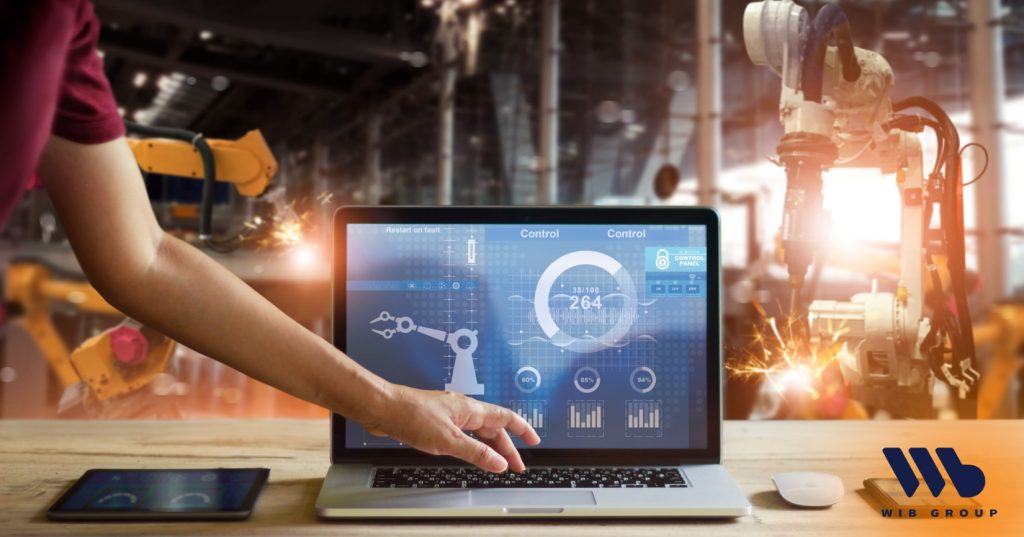
Think about your daily grind on the factory floor. Maybe you’re operating a machine, managing inventory, or ensuring quality control. Now, imagine those tasks supercharged.
What if your machine could tell you it needs maintenance before it breaks down, saving you precious downtime? What if tracking inventory was as simple as glancing at a digital dashboard that updates in real-time? What if you could use data to pinpoint exactly where production bottlenecks are happening and fix them, boosting efficiency like never before?
According to McKinsey, digital adoption can boost manufacturing productivity by up to 30%. Yet, less than a quarter of South African manufacturers are actively investing in digital technologies. That’s a gap we can’t afford to ignore.
This isn’t some futuristic fantasy – it’s a reality already unfolding in parts of South Africa’s manufacturing sector, driven by the power of digital technologies. But here’s the catch: to open that door and step into this more efficient, productive future, we all need to speak the language of digital.
For some, the word “digital” might conjure up images of complicated computer code and tech gurus in Silicon Valley. But in today’s manufacturing world, it’s becoming as essential as knowing how to operate a wrench or read a blueprint. It’s about understanding how computers and software are increasingly integrated into our everyday tasks.
Think about it:
- That new machine with the fancy touchscreen? That’s digital. Knowing how to navigate it efficiently is a digital skill.
- The system that tracks your raw materials and finished products? That’s digital. Understanding how to input and interpret that data is a digital skill.
- Even using a tablet to record quality checks instead of paper? You guessed it – a digital skill.
And we’re not talking about far-off concepts. Right here at home, factories like Toyota South Africa in Durban and Sappi’s Ngodwana Mill in Mpumalanga are using real-time data systems and predictive maintenance tools to improve productivity and cut costs. These companies are proof that digital transformation isn’t just possible in South Africa — it’s already happening.
The truth is, the digital revolution isn’t about robots taking over jobs. It’s about giving you more powerful tools to do your job better, smarter, and faster. It’s about making your work less repetitive and more focused on problem-solving and innovation.
Now, you might be thinking, “But I’ve been doing this job for years without all that fancy tech!” And that’s valid. But the world is changing fast. Our competitors in countries like China, India, and Brazil are already using these digital tools to produce goods more efficiently and at a lower cost. If we don’t catch up, our factories risk falling behind — and that affects all of us.
This isn’t just a problem for the “bosses” or the “youngsters” who grew up with computers. It affects everyone working in manufacturing. If we don’t have enough people with the right digital skills, our factories won’t be able to adopt these new technologies effectively. That means fewer opportunities for growth, less investment in our businesses, and potentially even job losses down the line.
But here’s the good news: it’s not too late to bridge the gap. Just like you learned how to operate specific machinery or follow safety protocols, digital skills can be learned too. It might seem daunting at first — especially if you haven’t had access to training or computers before — but there are many ways to get started:
- Your company might offer training programs. Take advantage of them! They’re an investment in you and the future of the business.
- Look for online courses or workshops. Even on a smartphone, there are free platforms where you can learn everything from basic computer skills to more specialised software.
- Don’t be afraid to ask for help from colleagues who are more tech-savvy. We’re all in this together.
- Even small steps count. Start by getting comfortable with using computers and basic software. Every bit of knowledge helps.
Think of it like upgrading your toolbox. Just as new tools can make your job easier and more efficient, digital skills are the new essential tools for the modern manufacturing worker. By embracing these skills, you’re not just future-proofing your career — you’re contributing to a stronger, more competitive, and more sustainable future for South Africa’s manufacturing heartland.
Let’s level up together.
At WIB Group, we help factories take practical steps toward digital transformation. Whether it’s helping your team build essential digital skills, streamlining your production with smart technologies, or improving efficiency with real-time data, we’re here to support your journey. Contact us at info@wibgroup.co.z and let’s chat about how we can work together to future-proof your operations and workforce.


